
AUGUST 25, 2026
The Complete Guide To Prenatal Paternity Testing
If questions about paternity are weighing on you during pregnancy, a prenatal paternity test can give you real answers long before your due date. At DNA Diagnostics Center (DDC), the Certainty™ Non-Invasive Prenatal Paternity (NIPP) test confirms who the biological father is using nothing more than a blood sample from the mother and a cheek swab from the possible father, with no risk to your baby.
Let’s talk about how it works and what you can expect.
Table of Contents
How a Prenatal Paternity Test Works
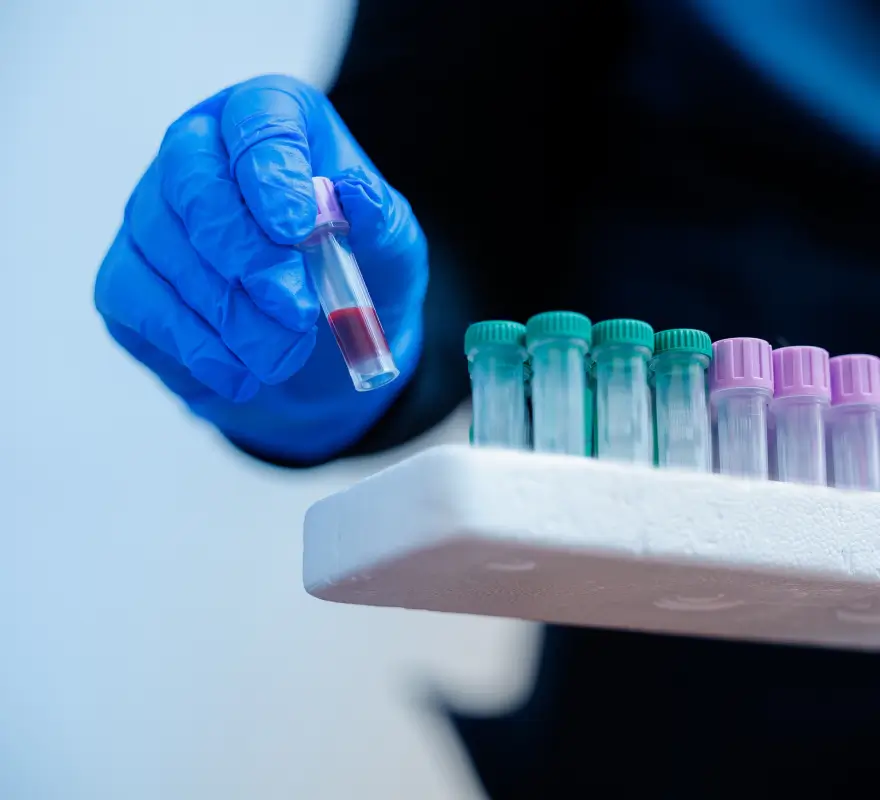
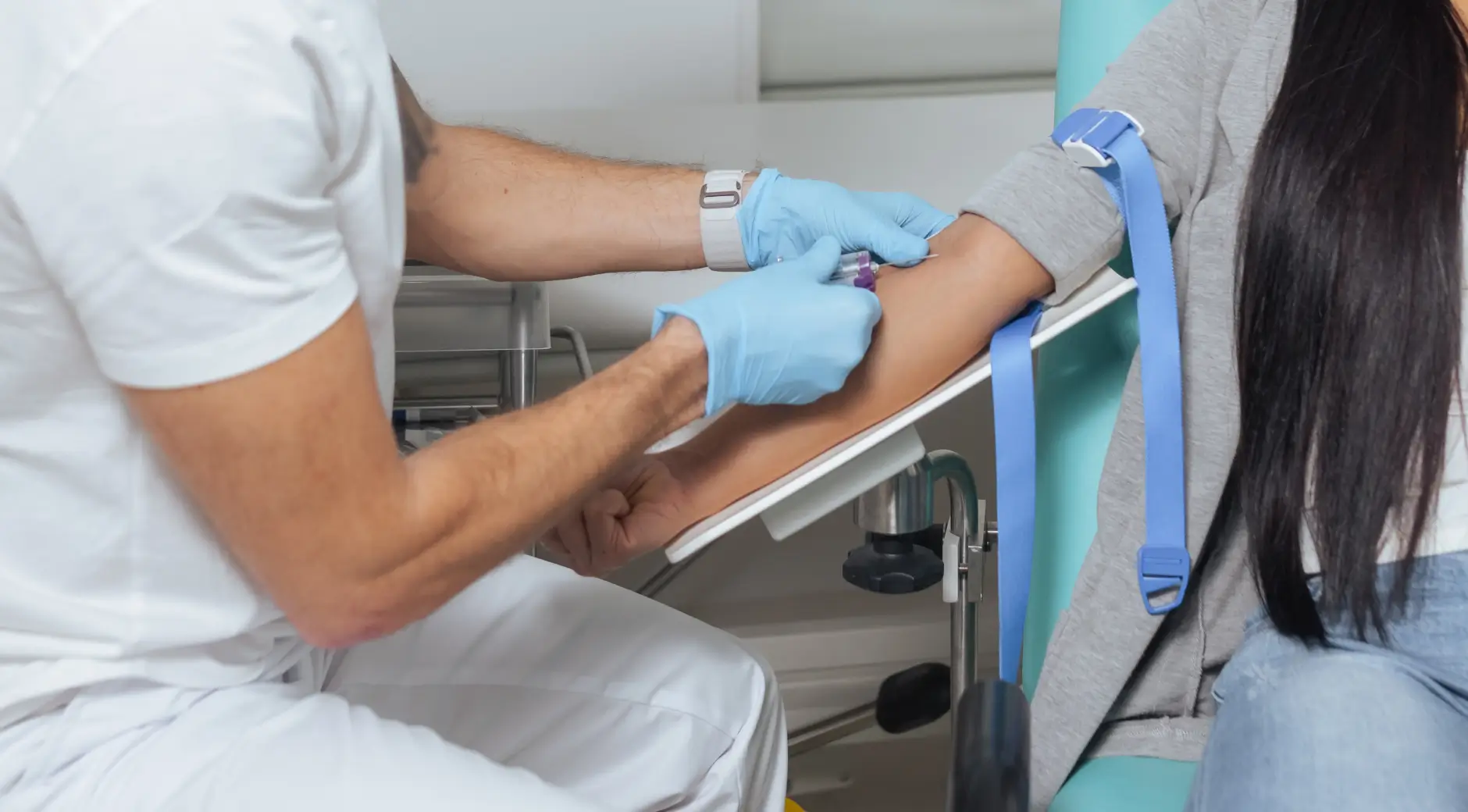
Early in pregnancy, small amounts of your baby’s DNA circulate freely in your bloodstream. A non-invasive prenatal paternity test takes advantage of this by drawing a simple blood sample from the mother and collecting a cheek swab from the potential father.
Our lab separates the baby’s DNA from the mother’s to build a DNA profile for the baby, then compares that profile against the father’s. Because it relies on a blood draw alone, nothing ever touches the baby’s environment in the womb.
DDC analyzes over 850 SNP (single nucleotide polymorphism) markers, a more advanced method than the STR analysis used for standard after-birth paternity tests. That added layer of precision is a must when you’re
working with the tiny fragments of fetal DNA found in a mother’s blood.
How Early Can You Do a DNA Test on an Unborn Baby?
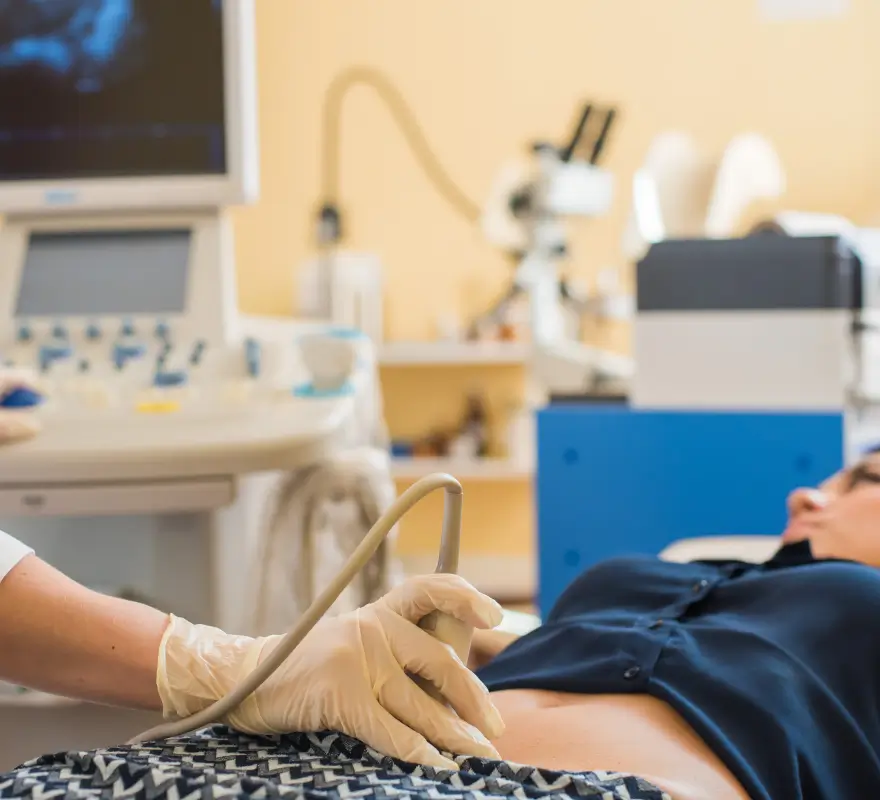
You can test as early as the 7th week of pregnancy. By that point, enough of the baby’s DNA is present in the mother’s blood to build an accurate profile. There’s no need to wait until later in your pregnancy, and there is no cutoff on the other end, so you can test at any time after week 7.
Getting a paternity test before birth also gives you time to sort out what matters most, whether that means adding a name to the birth certificate or arranging child support and custody.
How To Get a Prenatal Paternity Test

- Step 1: Call for a free consultation. A DDC prenatal specialist helps you choose the right test and coordinates every detail for your situation, with no obligation.
- Step 2: Collect the samples. DDC arranges the mother’s blood draw and the possible father’s sample, either at home or at a location near you.
- Step 3: Get your results. Results come back in as little as 3 business days through DDC’s secure online portal.
Rest Assured: A Paternity Test While Pregnant Is Safe
Older methods like amniocentesis and CVS involved sampling near the baby and carried a small risk of miscarriage, which is why most doctors no longer use them for paternity alone. A non-invasive DDC paternity test while pregnant skips all of that. The only sample taken from you is blood drawn from your arm, so there's no risk to you or your baby.
How Accurate Are Prenatal Paternity Tests?
Most parents-to-be are concerned with how accurate prenatal paternity tests are. The truth is that quality varies a lot from one lab to the next. A DDC result reports a 99.9% or higher probability of paternity when the man tested is the father, or 0% when he is not. Every sample is processed twice and reviewed by an in-house PhD. DDC’s is also the only NIPP test accredited by the AABB and the only one endorsed by the American Pregnancy Association. When samples are collected under DDC’s legal chain-of-custody process, those results are accepted in court.
Test At Home or at a Lab Near You
Your reason for testing decides how the samples are collected. If you want answers for your own peace of mind, the possible father’s cheek swab, or an alternate sample like a toothbrush or nail clippings, can be collected at home and submitted privately. You can even keep the test anonymous. These results are for personal knowledge and are not admissible in court.
If the results may be used in court, for example in a custody or child support case, you must visit a DDC lab near you, so the collection is witnessed under a strict chain-of-custody process. The lab work and the accuracy are exactly the same as the at-home option.
Get Answers You Can Trust From DNA Diagnostics Center
You don't have to carry this uncertainty alone. DDC's prenatal specialists average more than a decade of experience and will walk you through your options while managing the details from start to finish. Ask about Affirm payment plans that make testing more affordable during your free, no-obligation consultation.
Frequently Asked Questions About Prenatal Paternity Testing
Can I test if the possible father won’t do a cheek swab?
Often, yes. For peace-of-mind cases, DDC can work with alternate samples from the father, such as a toothbrush, nail clippings, an ear swab, or a cigarette butt. The lab first runs a viability check to confirm there is enough usable DNA before testing begins.
What if there is more than one possible father?
DDC can test more than one alleged father against the baby’s profile. The one exception is when two possible fathers are close biological relatives, such as brothers, because their DNA is too similar to tell apart with this method.
Do I need a doctor’s referral or my OB’s involvement?
You do not need a referral from your OB. DDC manages the entire process for you, from arranging the mother’s blood draw at a nearby collection site to coordinating the father’s sample, so nothing has to run through your doctor’s office.
Can I take the test if I’m expecting twins or multiples?
Not at this time. DDC’s non-invasive prenatal paternity test cannot be performed for a mother carrying twins or multiples, because current technology cannot separate more than one baby’s DNA profile from the mother’s blood. In that situation, you would test after the babies are born.
What if the possible father lives in another state or cannot come to the same appointment?
That’s not a problem. Separate appointments can be arranged for the mother and the father, and for peace-of-mind tests, the father’s cheek swab can even be collected at home.
Related Posts

Do Hospitals Do Paternity Tests at Birth?
Do hospitals do paternity tests at birth? Learn about how to get results as soon as possible with non-invasive prenatal…

A Comprehensive Framework for Immigration DNA Laboratory Selection
The laboratory matters because an immigration DNA test is more than a scientific analysis. When comparing laboratories, evaluate five factors.

Prenatal Paternity Testing Technology: Why DNA Methodology and Accreditation Matter
Not all prenatal paternity tests are scientifically equivalent. While many advertise greater than 99.9% accuracy, the technology used to achieve…